
Why Vet Physios Want To See Your Horse Move
We've all been in the situation where we've been asked to trot our horse up. Whether it's for the vet, farrier or saddle fitter. So why does a vet physio want to see your horse move?
When I arrive at an appointment, whether it's a new or regular client, I ask lots of questions like: "How has your horse been?" "Have you noticed any changes both good and bad?" "What are we wanting to improve or achieve between now and your next session?". These aren't trick ques tions, I just want to get a deeper insight into how you believe their current performance is and whether the buck they did last Thursday was out of excitememt or an act of pain.
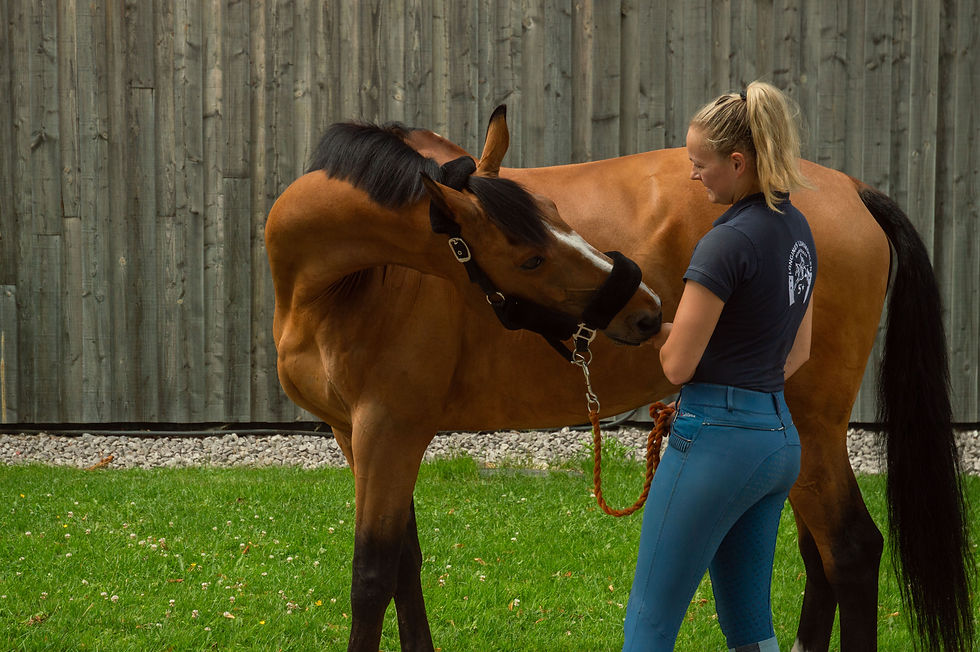
Whilst I'm asking these, I'm watching your horse, looking at how they are behaving and analysing how they stand and looking for any subtle signs of discomfort or whether they are compensating in a resting position.
Then, I'll ask if I can see them move. This includes walk, trot, backing up and small circles. I like to watch a horse walk away and walk back, and the same in trot. This is so I can watch both the front and hind end in each gait along with the movement of the body as a whole.

So, why do I ask to see these?
A dynamic assessment allows me to watch how the musculoskeletal system functions as a connected unit. Even the smallest gait changes can highlight where a horse might be weak, stiff or uncomfortable.
It also allows me to check that the horse is suitable for physiotherapy treatment and not showing signs of acute lameness that requires vet attention.
Walking and trotting in-hand in a straight line is a way to spot inconsistencies, whilst the tight circles and backing up might highlight stiffness within the joints.
Sometimes I might ask to see the horse move on the lunge to gain a deeper understanding of your horse's movement patterns and balance without the weight of the rider.
If your horse presents a specific behaviour only when under saddle, I might also ask to see your horse ridden. This helps me to evaluate the interaction between the horse, rider and tack.
By observing your horse move first, I can see where I might believe areas of tightness or discomfort may be, before I even start palpating.
As a whole this allows me to create a safe, tailored, effective treatment plan for both myself and you, the owner/rider, to follow!


Comments